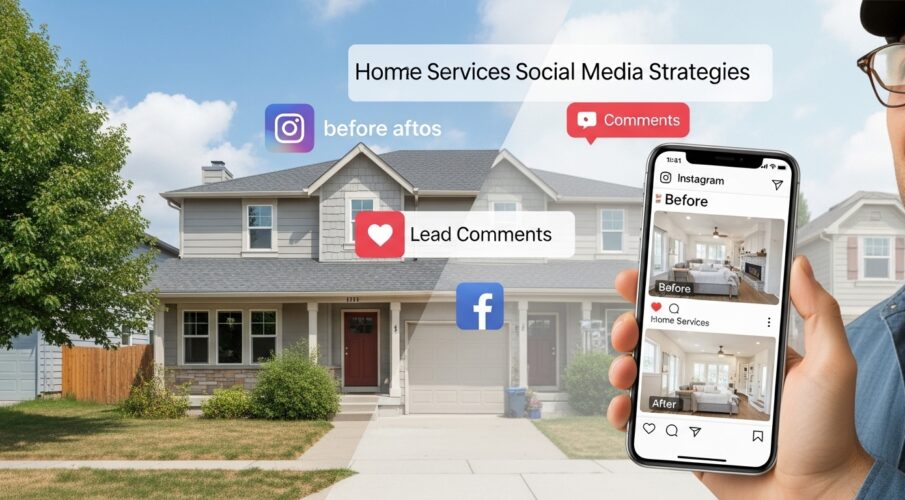
Home Services Social Media Strategies That Actually Win Clients
You do solid work. Your customers are happy. Your van is clean, your crew shows up on time, and your reviews are decent. But your phone still goes quiet between jobs, and every competitor down the street seems to be booked three weeks out.
The difference often comes down to visibility — and specifically, how well a business shows up where local homeowners are actually spending their time. That means social media. Not posting for the sake of posting, but using platforms in a way that builds real local authority, surfaces your work to the right zip codes, and converts curious scrollers into booked appointments.
This guide covers the home services social media strategies that consistently produce results for contractors, trade businesses, and local service providers across the U.S. — from the platforms worth your time to the exact content formats that generate leads.
Why Social Media Works Differently for Home Services
The home services industry has a trust problem — not because contractors aren’t trustworthy, but because homeowners can’t easily vet quality before letting someone into their house. Social media solves that. It lets you show your work before a prospect ever picks up the phone.
Unlike e-commerce or software, home service purchases are high-stakes and local. A homeowner doesn’t just want the cheapest option — they want someone they feel safe with. Your social presence becomes a portfolio, a testimonial page, and a first impression all at once.
The other reason social media is especially powerful for home services: most of your competitors are doing it badly. Blurry before-and-after photos. Posts with no captions. Facebook pages last updated in 2021. Showing up with consistency and quality immediately separates you.
What Homeowners Are Actually Looking For
Before planning any content, it helps to understand the mindset. When a homeowner in your service area sees your Instagram Reel or your Facebook post in a local group, they’re asking:
- Is this business legit and local?
- Do they do the type of work I need?
- Can I trust them inside my home?
- What do their past customers say?
Every content decision you make should answer at least one of those questions. That’s the filter.
Choosing the Right Platforms for Your Home Service Business
You don’t need to be everywhere. You need to be where your target customers are — and where you can show up with enough consistency to matter. For most home service businesses in the U.S., that narrows to three platforms that deliver the best return.
Facebook: Still the Local Lead Engine
Facebook remains the dominant platform for reaching homeowners, particularly in the 35–65 age bracket — which is your core buying demographic for home services. The platform’s targeting tools let you reach people by zip code, homeowner status, income level, and even recent life events like moving.
Facebook’s local group ecosystem is also uniquely valuable. Neighborhood groups, community pages, and HOA groups are where homeowners ask for contractor recommendations daily. Being active in those spaces — not as an advertiser, but as a helpful presence — builds trust faster than any paid post.
Facebook Lead Ads are particularly effective for home service businesses because they capture contact info without requiring the prospect to leave the app. A well-structured lead form for a free roof inspection or HVAC tune-up check can produce inquiries at a cost that traditional advertising can’t match.
Instagram: Your Visual Portfolio
Instagram is a close second, especially for businesses that do visually compelling work — landscaping, kitchen remodels, exterior painting, hardscaping, deck building. High-quality before-and-after content thrives here.
Instagram Reels have become the most important format on the platform for home service contractors. Short video clips showing a transformation in process — a cracked driveway becoming a clean concrete finish, a patchy lawn turned lush — consistently outperform static images in reach and engagement. The algorithm rewards video, and your prospects reward authenticity.
Instagram is also where younger homeowners (millennial buyers now represent the largest share of the home purchase market) discover local service providers. If you’re not visible there, you’re invisible to a growing segment.
Nextdoor: The Overlooked Gem
Nextdoor is hyper-local by design. It’s built around neighborhoods and verified addresses, which means every impression you earn is from someone within a few miles of your service area. For home service businesses, that’s extremely valuable.
Claiming a business profile on Nextdoor, responding to neighbor recommendations, and occasionally running neighborhood sponsorships can produce leads at very low cost. Many contractors sleep on this platform — which means the ones who don’t have it to themselves.
Platforms Worth a Smaller Investment
TikTok is increasingly viable if you’re comfortable on camera and your work is visually dynamic. YouTube Shorts require minimal additional effort if you’re already creating Reels content. Pinterest can drive traffic for high-ticket project types like kitchen renovations or custom outdoor spaces — but treat it as supplemental, not primary
Content That Actually Generates Local Leads
The most common mistake home service businesses make on social media is treating it like a bulletin board — posting job openings, promotions, and ‘we’re the best’ claims that nobody engages with. Content that generates leads is content that serves the audience first.
Before-and-After Project Photography
This is the cornerstone of home service social content. A well-shot before-and-after post does several things at once: it demonstrates the scope of your work, establishes visual proof of quality, triggers aspirational thinking in prospects who want the same result, and gives you shareable content that travels through neighborhood networks.
Professional project photography doesn’t require hiring a photographer for every job. A modern smartphone with good natural lighting will handle most of what you need. A few rules that make these posts land better:
- Shoot at the same angle for before and after — the transformation reads cleaner
- Use captions that include the project type, city or neighborhood, and a brief description of what was done
- Tag your location to improve local discoverability
- Include the homeowner’s reaction or a quote if they’re willing
Instagram Reels and Short Video for Contractors
You don’t need a production crew. Some of the highest-performing contractor Reels are 30–60 seconds of honest, unscripted footage showing the work being done. A roofer walking a job site, a plumber explaining why a certain pipe configuration is the right choice, a landscaper doing a time-lapse of a day’s work.
What makes Reels effective for home services:
- They show craftsmanship in motion — which photography can’t fully capture
- The algorithm pushes them to non-followers in your area, expanding your reach for free
- They humanize your business — people hire people, not logos
- They’re repurposable across Instagram, Facebook, TikTok, and YouTube Shorts with minimal extra effort
A simple Reels framework that works: problem → process → result. Show what it looked like before, show the team working, show the finished result. Narrate it in plain language. Done.
Client Testimonial Video Production
A written Google review is valuable. A 60-second video of a happy homeowner standing in front of their new fence, explaining what the experience was like, is exponentially more powerful.
Most satisfied customers will record a short testimonial if you simply ask — especially right after the job is done, when the excitement is fresh. A few things that make testimonial videos more effective:
- Record outdoors or in the freshly completed space for visual context
- Keep it conversational — let them talk naturally rather than reading a script
- Ask specific questions: ‘What did the yard look like before?’ or ‘Was the crew professional?’
- Post the video to Facebook, embed it in your Google Business profile, and clip it for Instagram Reels
Testimonial videos build the kind of trust that no ad creative can replicate. They’re also highly shareable content in local community groups.
Seasonal Maintenance Content Reminders
Homeowners need maintenance reminders — and they appreciate businesses that help them stay ahead of problems rather than just showing up when something breaks. Seasonal reminder posts serve your audience while keeping your brand top of mind.
Some examples by season:
- Spring: HVAC tune-up before cooling season, gutter cleaning after winter, sump pump inspection
- Summer: Deck maintenance, pest control timing, sprinkler system check
- Fall: Furnace inspection, chimney cleaning, weatherstripping and insulation
- Winter: Pipe insulation, roof inspection before snow loads, generator readiness
These posts work because they’re genuinely helpful — not sales pitches dressed up as content. They position you as a trusted advisor, not just a vendor. And they naturally invite inbound inquiries from homeowners who realize they’re behind on that specific task.
Home Service Promotional Offer Templates
Promotions work on social media when they’re time-bound, specific, and easy to act on. Vague offers like ‘call for a free estimate’ underperform against specific ones like ‘$50 off your first HVAC service call, this month only.’
A few formats that consistently perform for home service promotions:
- Seasonal specials tied to a real reason (spring cleaning deals, pre-winter HVAC checks)
- Referral incentives promoted publicly to existing followers
- New customer offers paired with a simple lead form
- Package deals that bundle commonly requested services
Design matters here. A clean, readable graphic with your branding, the offer clearly stated, and a clear call to action will always outperform a text-only post or a cluttered DIY design. Canva has serviceable templates, but investing in a consistent visual look pays off over time.
Paid Advertising Strategies for Home Service Businesses
Organic content builds authority over time. Paid advertising accelerates it — and for home service businesses with specific service areas, the targeting available today makes paid social far more precise than traditional advertising ever was.
Facebook Lead Form Optimization
Facebook Lead Ads are one of the most effective paid formats for home services because they remove friction. Instead of sending a prospect to your website (where many will bounce), the lead form fills in automatically with their Facebook profile information.
A few factors that separate high-converting lead forms from wasted ad spend:
- Offer something specific: a free estimate, a complimentary inspection, a same-day quote — not just ‘contact us’
- Keep the form short: name, phone number, and the service they need. Every additional field reduces completion rates
- Write the form headline and description to match the ad creative exactly — consistency reduces confusion and abandonment
- Set up instant lead notifications — response speed is the single biggest factor in conversion rate. A lead responded to within five minutes converts at a dramatically higher rate than one that waits hours
One often-missed optimization: add a qualifying question to your lead form that filters out mismatched prospects. Something like ‘Are you the homeowner?’ or ‘What’s your approximate zip code?’ This improves lead quality even if it slightly reduces volume.
Targeted Zip Code Advertising
One of the most practical advantages of Facebook and Instagram advertising for home service companies is zip code targeting. Rather than wasting budget on impressions outside your service area, you can restrict your ads to the exact zip codes you serve — or even the ones most profitable for your business.
A smart zip code strategy for home services:
- Layer zip code targeting with homeowner status (available in Facebook’s detailed targeting options)
- Suppress zip codes where job costs consistently underperform
- Run separate campaigns for different services if they have different ideal customer profiles by geography
- Test neighborhood-level targeting with higher budgets in high-value areas (neighborhoods where projects are larger, permits are pulled frequently, and word-of-mouth is active)
Google Local Services Ads Management
Google Local Services Ads (LSAs) sit above traditional paid search results and are specifically designed for home service categories — plumbing, HVAC, roofing, electrical, cleaning, landscaping, and many others. They display a ‘Google Guaranteed’ or ‘Google Screened’ badge, which significantly improves click-through rates.
Unlike traditional Google Ads where you pay per click, LSAs charge per qualified lead — meaning you only pay when a potential customer contacts you through the ad. This makes them one of the most efficient paid channels available to home service businesses.
Optimizing your LSA profile:
- Verify your license, insurance, and background check to unlock the Google Guaranteed badge — this is non-negotiable for trust
- Collect and respond to Google reviews consistently — LSAs surface higher when your rating and review count are strong
- Keep your business hours accurate and respond to leads quickly — response time affects your LSA ranking
- Track which services are producing the best lead quality and adjust your active services accordingly
Building Trust and Authority Online
Leads don’t close on social media alone. They close because the prospect trusts the business enough to pick up the phone. Trust is the asset you’re really building with every post, every review response, and every community interaction.
Verified Contractor Status and Trust Badges
Google Guaranteed is the most powerful trust badge available to home service businesses. It signals that Google has verified your licensing, insurance, and background checks — which is exactly what homeowners want to know before letting someone into their home.
Beyond Google Guaranteed, other signals that build visible credibility:
- BBB accreditation displayed prominently in your profile
- Trade association memberships (NARI, PHCC, ACCA, etc.)
- State licensing badge links in your Facebook and Instagram bios
- Verified reviews on Angi, Yelp, and Houzz cross-promoted through your social content
Community Group Networking Strategies
The most authentic leads often come not from paid ads but from community relationships. Facebook neighborhood groups, Nextdoor conversations, and local HOA forums are spaces where homeowners actively seek contractor recommendations.
The approach that works here is genuine participation, not self-promotion. Showing up as a helpful neighbor — answering questions about maintenance issues, sharing useful tips, congratulating neighbors on projects — builds a reputation that translates into referrals.
Some practical tactics:
- Join the 5–10 most active neighborhood groups in your service area
- Respond to requests for contractor recommendations when your category comes up — briefly, helpfully, without a hard pitch
- Share useful content (seasonal tips, local permit information, storm damage guidance) that serves the group rather than advertising to it
- When a past customer recommends you in a group, thank them publicly and engage with the post
This approach requires patience. But the leads it produces are pre-warmed by a peer recommendation — which means they convert faster and complain less.
Responding to Reviews Publicly
Every review response — positive or negative — is visible to prospective customers. A business that thanks customers thoughtfully and handles complaints professionally signals maturity and reliability. One that ignores reviews or responds defensively signals the opposite.
The standard to aim for: respond to every Google review within 24 hours. For positive reviews, be specific in your thanks. For negative ones, acknowledge the concern, offer to make it right offline, and keep the response professional regardless of what was written.
Local Lead Generation Tactics That Scale
The best social media strategies for home services aren’t just about awareness — they’re about generating leads you can actually close. Here’s how the top-performing local businesses convert their social presence into booked jobs.
Referral Activation Through Social
Your happiest customers are your best salespeople — they just need a prompt. A well-timed social post asking followers to tag a friend who might need your services can spark referral chains that cost nothing. Pairing that with a referral incentive (a gift card, a discount on their next service, a charitable donation in their name) increases the likelihood they’ll actually do it.
Retargeting Warm Audiences
If you’re running any paid social, install the Facebook Pixel on your website (or use your CRM to create custom audiences). Retargeting people who visited your site but didn’t convert is one of the highest-ROI tactics available — these are warm prospects who already know you exist.
A simple retargeting sequence for home services:
- Day 1–3: Show a testimonial video to reinforce credibility
- Day 4–7: Show a before-and-after project post to reinforce quality
- Day 8–14: Show a specific promotional offer with a clear CTA to book
Leveraging Seasonal Peaks
Home service demand follows seasonal patterns. HVAC companies peak in spring and fall. Landscapers peak in spring. Roofers see spikes after storm events. Planning your paid campaigns to front-run these peaks — starting ad spend two to three weeks before demand typically rises — ensures your brand is top of mind when homeowners are ready to book.
Organic content should match this cadence. Publishing seasonal preparation content 30 days before the relevant season keeps your audience engaged and positions you as the proactive, expert choice.
Measuring What Matters
Social media for home services isn’t a vanity exercise. The metrics that matter are the ones that connect to revenue.
Metrics That Translate to Business Results
- Lead form submissions and cost per lead from paid campaigns
- Phone call clicks from your Facebook and Instagram profiles
- Direct messages that convert to appointment bookings
- Profile visits from local audiences (filtered by geography in insights)
- Review count and average star rating growth month over month
Reach and follower count matter less than most home service owners think. A Facebook page with 400 followers and consistent engagement from local homeowners is worth more than one with 4,000 followers who don’t live within driving distance of your service area.
A Simple Monthly Review Habit
Set aside 30 minutes once a month to review your top-performing content by engagement, your lead form performance if you’re running ads, your Google LSA lead volume and cost, and any notable community mentions or referrals you can trace back to social activity. That’s enough to identify what’s working and double down — without turning social media into a second job.
Frequently Asked Questions
How often should a home service business post on social media?
Consistency matters more than frequency. Three to four posts per week on your primary platform is enough to maintain visibility without burning out. What hurts more than posting too little is posting inconsistently — going dark for two weeks and then flooding the feed sends the wrong signal to both algorithms and followers.
Do Facebook ads still work for home services in 2025?
Yes — particularly Facebook Lead Ads targeting homeowners by zip code. The platform’s audience data for homeowner demographics remains robust, and the cost per lead for home service categories is often lower on Facebook than on Google Search. The key is using the right ad format (lead forms, not link clicks) and following up on leads within minutes, not hours.
What’s the difference between Google LSAs and regular Google Ads for contractors?
Google Local Services Ads charge per qualified lead rather than per click, which makes the cost model more predictable for home service businesses. They also display above regular paid search results and carry the Google Guaranteed or Google Screened badge, which increases trust and click-through rates. Regular Google Search Ads give you more keyword-level control but require more management and typically cost more per conversion in competitive service categories.
Should I hire someone to manage social media, or do it myself?
Both approaches can work. Doing it yourself keeps the content authentic — you know the jobs, the customers, and the craft better than any agency. But it requires consistent time commitment. If you outsource, make sure the person managing your accounts actually understands your trade and your local market. Generic content written by someone who’s never been on a job site will feel hollow to homeowners who know better.
How important is video content for home service contractors?
Very. Video outperforms static images across every major platform right now — in reach, engagement, and lead conversion. You don’t need professional production. A smartphone, decent lighting, and 60 seconds of showing your work in progress is enough to compete. The contractors who adopt short-form video now will be well ahead of those who wait.
What should be in my Facebook business profile to maximize lead generation?
Your profile should include a clear service area, all relevant service categories selected, a profile photo that shows your logo or your face (not a van or a tool), a cover photo showcasing your best project, a complete ‘About’ section with your license number and service area cities, your website URL, and your phone number with click-to-call enabled. The goal is to remove every possible reason for a prospect to hesitate before contacting you.
Conclusion
The home services industry is built on trust, and social media is now one of the fastest ways to earn it — or squander it. The businesses winning right now are the ones that show their work consistently, engage authentically with their local communities, and back up their organic presence with smart, targeted paid strategies.
None of this requires a massive budget or a marketing team. It requires clarity about what your target customer needs to see before they call you, the discipline to show up consistently, and the judgment to focus on platforms and formats that actually move the needle for local lead generation.
Start with one platform. Master it. Document your best work. Build your review velocity. Then layer in paid amplification once your organic foundation is solid. That sequence works — and it scales.
If you want a system for turning your social presence into a predictable lead engine, DecodingLeads helps home service businesses build exactly that.